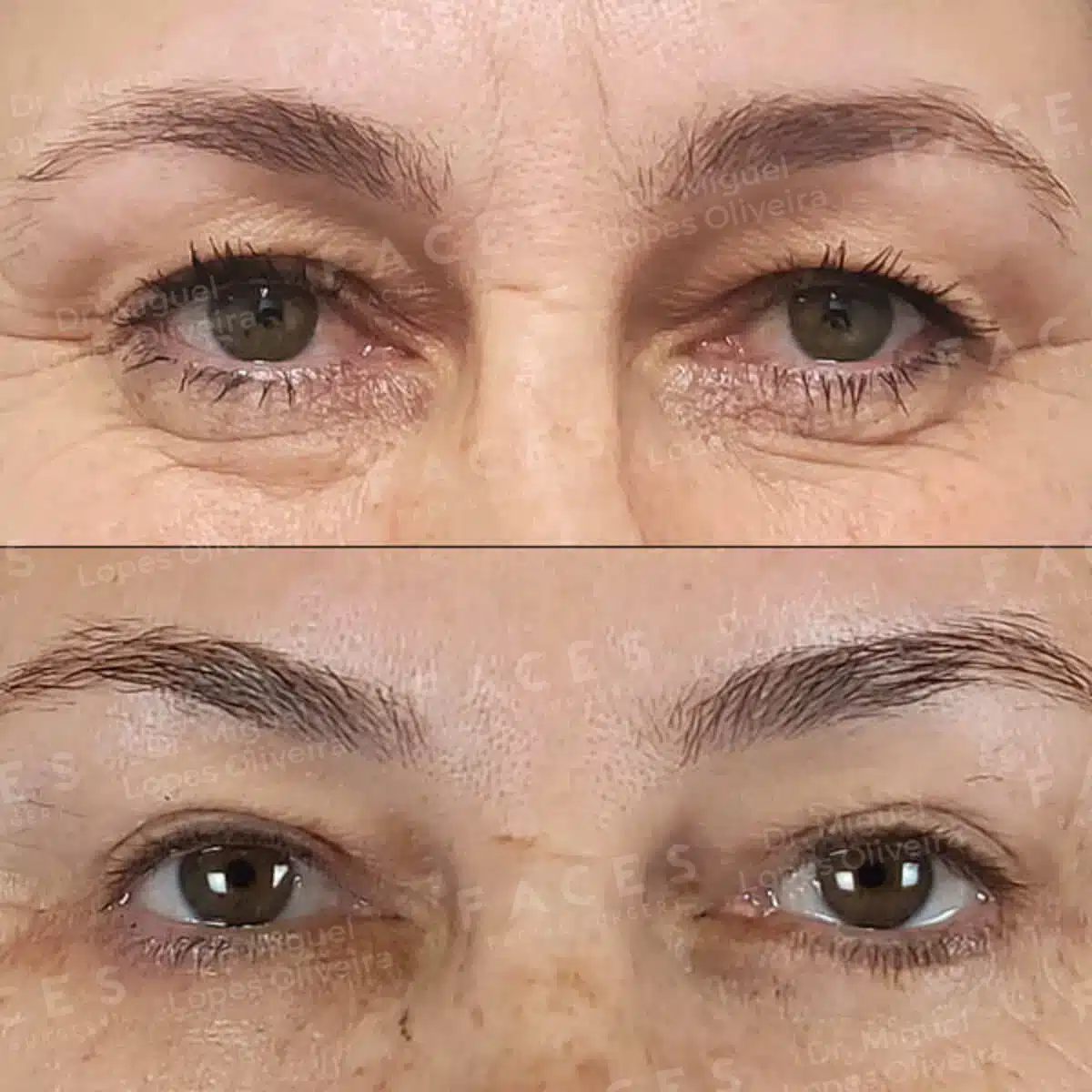
Blepharoplasty (Eyelid Surgery) for Eye Bags and Clearer Vision

Result FLUX DEV 90cd6a75 513b 470b A98a 7cfae0b9962b 0.jpeg

Blepharoplasty and vision enhancement surgery has evolved significantly over the past few decades, transitioning from an intervention solely focused on rejuvenating the periocular aesthetic to one that also offers tangible functional benefits. Originally developed to excise redundant upper eyelid tissue for cosmetic rejuvenation, the procedure has gained prominence for its capacity to improve the superior visual field, subtly modify refractive parameters, and influence corneal biomechanics. By alleviating the excess tissue that may physically obstruct vision, blepharoplasty and vision enhancement surgery now stands as a dual-purpose intervention – one that addresses both the appearance of the eyelids and the patient’s overall visual performance. In clinical practice at FACES, each patient is assessed on an individual basis, ensuring that both anatomical considerations and ocular function are evaluated thoroughly.

Over time, clinical evidence has emerged to support the notion that the removal of excess eyelid tissue can yield quantifiable improvements in vision. Patients experiencing dermatochalasis or mild ptosis often present with complaints that include compromised visual fields, eye strain during reading or driving, and difficulties with activities requiring a wide range of vision. These functional disturbances, which might initially be attributed to simply ageing or cosmetic concerns, are increasingly recognised as having a direct impact on the quality of life. In this context, blepharoplasty and vision enhancement surgery provides a therapeutic option that extends beyond mere cosmetic refinement; it offers a means to restore a more physiologically optimal configuration of the eyelid and, indirectly, to enhance visual comfort and efficiency.

The present article explores the multifaceted aspects of blepharoplasty and vision enhancement surgery by examining its evolution, clinical rationale, and the evidence underpinning its benefits on ocular function. Detailed discussions include the anatomical and biomechanical mechanisms underlying the procedure’s impact on vision, as well as insights from systematic reviews and clinical studies that highlight improvements in visual acuity, refraction, and patient satisfaction. Each section draws from current research findings and clinical experience, providing a comprehensive understanding for clinicians and patients alike. Emphasis is placed on adopting an individualised approach, where the unique anatomical characteristics and functional needs of each patient inform the surgical decision-making process.

From the careful preoperative evaluation to the meticulous surgical technique and subsequent postoperative follow-up, every step in the management of blepharoplasty and vision enhancement surgery is designed to maximise patient benefit. The emphasis at FACES is not only on achieving aesthetically pleasing outcomes but also on ensuring that the functional gains—such as improved superior visual fields and a reduction in ocular discomfort—are both predictable and sustainable over the long term. As research continues to elucidate the interplay between eyelid morphology and visual function, clinicians are better equipped to set realistic expectations and to tailor interventions to the specific needs of each patient.

Understanding Blepharoplasty and Vision Enhancement Surgery

The evolution of blepharoplasty from a predominantly cosmetic procedure to an intervention with significant functional benefits represents a paradigm shift in periocular surgery. In its early days, the primary aim of eyelid surgery was to remove sagging skin and fat deposits in order to achieve a more youthful appearance; however, clinical observations gradually suggested that the removal of this excess tissue might also relieve a mechanical hindrance to the visual field. Blepharoplasty and vision enhancement surgery now encompasses a broader approach that seeks to improve the anatomical configuration of the eyelids while simultaneously addressing visual complaints.

At FACES, the surgical approach is based on the understanding that even a small amount of excess skin on the upper eyelid can act as a physical barrier, diminishing the superior visual field and causing subtle disturbances in vision. Innovative refinements in surgical technique have allowed surgeons to excise precisely the redundant tissue without compromising eyelid function. The procedure has been modified to balance cosmetic rejuvenation with functional restoration, and outcomes have been consistently positive in appropriately selected patients. Given the individual variability in eyelid anatomy, an in-depth preoperative assessment is essential; this typically involves a detailed examination of the skin, muscle tone, and the underlying support structures that govern eyelid function.

Advances in diagnostic imaging and careful clinical evaluation have shed light on the complex relationship between eyelid morphology and ocular health. Studies have demonstrated that even minor improvements in eyelid positioning can lead to measurable enhancements in the quality of the visual field. By reducing the weight of the excessive tissue, the eyelid is repositioned in a manner that allows for more uniform exposure of the ocular surface to ambient light. This mechanism not only facilitates a clearer visual field but also improves ocular comfort during sustained visual activities. Thus, blepharoplasty and vision enhancement surgery is now regarded as a holistic intervention that integrates aesthetic refinement with a functional restoration of vision.

In addition to the mechanical benefits, the procedure can also instil a greater sense of confidence in patients by addressing both the appearance and function of the periocular region. The integration of functional and aesthetic considerations has paved the way for more nuanced patient consultations, where realistic expectations are communicated prior to surgery. Every surgical plan is custom-tailored to the patient’s unique anatomical and functional requirements, ensuring that the intervention yields optimal results that resonate with the individual’s lifestyle and needs.

Clinical Rationale and Indications for Blepharoplasty and Vision Enhancement Surgery

The decision to recommend blepharoplasty and vision enhancement surgery is founded on well-established clinical indications and a clear understanding of the patient’s individual pathology. One of the primary clinical rationales for this procedure is the presence of excessive upper eyelid skin—commonly known as dermatochalasis—which can not only have cosmetic implications but also lead to significant functional impairments. Patients who exhibit a pronounced drooping of the eyelid often report a constricted superior visual field that interferes with everyday tasks such as reading, driving, and using digital devices. The mechanical obstruction introduced by the redundant tissue contributes to increased eye strain and, in some cases, may even precipitate compensatory postural adjustments that result in neck or back discomfort.

Clinical studies have provided robust evidence supporting the functional benefits of blepharoplasty and vision enhancement surgery. For instance, research comparing the outcomes of traditional upper eyelid blepharoplasty with more targeted interventions has demonstrated that removal of excess tissue can lead to statistically significant improvements in the superior visual field, even when the primary indication for surgery is cosmetic in nature1. Such findings substantiate the dual-purpose nature of the intervention, reinforcing the notion that functionality and aesthetics are not mutually exclusive but rather complementary goals in periocular surgery.

Beyond the correction of dermatochalasis, the procedure is also indicated for patients presenting with mild ptosis, where the drooping eyelid contributes to visual obstruction. In these scenarios, the surgical plan is carefully adjusted to address not only the redundant skin but also the underlying muscle and soft tissue framework. The aim is to achieve a rebalanced eyelid position that alleviates the blockage of the visual axis while maintaining a natural and harmonious appearance. As with all surgical interventions, thorough patient evaluation is critical; factors such as the patient’s age, skin elasticity, and overall ocular health must be considered to develop an effective and safe treatment plan.

Moreover, the decision-making process is augmented by the integration of advanced diagnostic techniques, including detailed refraction assessments and ocular imaging. These tools enable clinicians to document baseline visual function and to predict the degree of functional improvement that can be realistically achieved. By establishing a clear correlation between the anatomical changes induced by the surgery and the resultant visual benefits, the clinical rationale for blepharoplasty and vision enhancement surgery is both evidence-based and patient-centred. Each candidate for this intervention is carefully selected after consideration of all relevant factors, ensuring that the potential gains in visual function justify the surgical risks.

Impact on Visual Acuity and Refraction Changes

One of the most compelling advantages of blepharoplasty and vision enhancement surgery is its potential to effect positive changes in visual acuity and refractive status. Excess upper eyelid tissue, when present, can obstruct the precise pathway of incoming light, thereby affecting the quality and focus of images projected onto the retina. Clinical measurements have shown that the removal of this tissue can result in a subtle but statistically measurable improvement in visual acuity under certain conditions1. While the procedure is not performed with the primary goal of refractive correction, the accompanying enhancement in the visual system is well documented.

The mechanical relief provided by the excision of redundant tissue facilitates a more uniform distribution of light over the ocular surface. This, in turn, can lead to minor modifications in refractive error, as the optical pathway is optimised by eliminating sources of aberration. Although changes in refractive parameters are generally modest, even a slight improvement can have a meaningful impact on a patient’s overall visual performance and comfort. The scientific community has taken a keen interest in these findings, with several studies systematically exploring the postoperative changes in visual function following the intervention.

A deeper understanding of the optical effects of blepharoplasty and vision enhancement surgery has spurred further research into the interplay between eyelid mechanics and ocular refraction. Investigators have noted that patients with significant dermatochalasis who undergo the procedure may experience a reduction in the degree of induced astigmatism and other minor refractive anomalies. This improvement is thought to occur as the pressure exerted by the excess tissue on the globe is alleviated, allowing the eye to settle into a more naturally optimised shape. The considerations regarding visual acuity and refraction compel clinicians to assess patients both before and after surgery to objectively document the benefits and to guide postoperative care.

Furthermore, the subtle yet positive impact on visual function supports the broader therapeutic rationale behind blepharoplasty and vision enhancement surgery. By providing an objective improvement in aspects of vision that are critical to everyday activities, the procedure gains additional significance beyond cosmetic enhancement. This multifactorial benefit not only validates the surgical approach but also contributes to heightened patient satisfaction, as individuals report experiencing clearer and more comfortable vision in their daily lives.

Corneal Biomechanical and Tomographic Considerations

In addition to improvements in visual acuity and refraction, blepharoplasty and vision enhancement surgery has been associated with notable changes in corneal biomechanics and tomographic parameters. The upper eyelid, by virtue of its anatomical proximity to the ocular surface, can have a direct influence on the cornea’s shape and its intrinsic biomechanical properties. When excessive tissue from the upper eyelid is removed, a redistribution of mechanical forces may occur at the ocular surface, leading to measurable alterations in corneal curvature and thickness2.

Advanced diagnostic devices, such as corneal imaging systems, have enabled clinicians to quantify these subtleties. Tomographic evaluations conducted pre-and postoperatively reveal that changes in the curvature and structural integrity of the cornea are not only possible but can be directly correlated with the extent of tissue removal. While the primary objective of the surgery is not to alter the cornea per se, these postoperative findings underscore the interconnected nature of the periocular anatomy and ocular function. Surgical interventions in the upper eyelid can, therefore, have secondary effects on the corneal profile, potentially contributing to improved optical performance.

The relationship between eyelid position and corneal biomechanics has spurred further research into how mechanical forces exerted by the orbicularis oculi and overlying soft tissues interact with the corneal stroma. It is increasingly evident that alleviating the pressure from redundant eyelid skin can help restore the cornea’s natural state, thereby promoting more stable refractive outcomes. Detailed analyses using devices like Pentacam have demonstrated that the removal of excess tissue is associated with reductions in corneal irregularities and subtle modifications in overall thickness measurements5. Such findings reinforce the importance of comprehensive preoperative evaluation and underscore the potential of blepharoplasty and vision enhancement surgery to yield benefits that extend beyond surface-level aesthetics.

It is important to recognise that these biomechanical and tomographic changes are highly individualised. Factors such as baseline corneal geometry, the extent of dermatochalasis, and even patient age can influence the degree to which the cornea responds to the surgical intervention. For this reason, a thorough evaluation involving corneal topography and other imaging modalities is integral to the planning process. In doing so, clinicians can better predict and document the changes that are most likely to occur, thereby aligning postoperative expectations with observed outcomes. This synergy between surgical technique and diagnostic precision solidifies the standing of blepharoplasty and vision enhancement surgery as a procedure that benefits patients on multiple fronts.

Functional and Aesthetic Outcomes: Evidence from Systematic Reviews

A number of systematic reviews and meta-analyses have evaluated the dual functional and aesthetic benefits of blepharoplasty and vision enhancement surgery, providing a comprehensive picture of its efficacy. These reviews consolidate data from multiple randomised controlled trials, underscoring that when patients are selected carefully and the technique is applied judiciously, the outcomes tend to be consistently positive. Evidence from these rigorous analyses indicates that the procedure reliably improves the superior visual field and reduces ocular discomfort while also delivering enhancements to the periocular appearance3 4.

In clinical practice, the convergence of functional gains and aesthetic improvement is particularly valued. Patients often report a heightened sense of well-being that accompanies both clearer vision and a more youthful appearance. Although the primary intent of the intervention may be to alleviate functional impediments, the secondary aesthetic benefits are also significant – boosting confidence and overall satisfaction. This dual effectiveness is reflected in the high rates of patient satisfaction reported across diverse clinical studies, where both aspects of the surgical outcome contribute to a more comprehensive quality of life improvement.

Moreover, these systematic reviews emphasise that while individual outcomes may vary, the trend across large patient cohorts is unmistakably positive. The objective data derived from visual field testing, precise refraction assessments, and corneal imaging serve as robust evidence that blepharoplasty and vision enhancement surgery can produce measurable improvements. Importantly, the degree of enhancement is commensurate with the preoperative severity of dermatochalasis and other eyelid abnormalities, suggesting that the benefits of the intervention are both predictable and reproducible. Such findings provide clinicians with greater confidence in recommending the procedure to appropriately selected patients.

The compilation of data from various studies also highlights critical considerations regarding timing and patient counselling. Patients are advised that improvements, while significant, are often gradual and entirely individualised. Setting realistic expectations is key to ensuring long-term satisfaction, with clinicians providing detailed preoperative information on the anticipated outcomes. As research continues to advance our understanding of the complex interaction between eyelid anatomy and visual function, the evidence base for blepharoplasty and vision enhancement surgery is likely to grow even stronger, further solidifying its role as a cornerstone of functional oculoplastic intervention.

Patient Evaluation, Selection, and Realistic Expectations

The success of blepharoplasty and vision enhancement surgery hinges on a comprehensive and nuanced patient evaluation process. Prior to recommending surgery, clinicians at FACES conduct a detailed assessment that encompasses both anatomical and functional aspects. A meticulous review of the patient’s medical history, ocular health, and specific complaints—such as difficulties with the superior visual field or enhanced ocular strain—is necessary to determine whether the intervention is likely to yield substantial benefits.

A thorough physical examination, coupled with advanced imaging techniques, forms the cornerstone of patient selection. Key parameters assessed include the degree of dermatochalasis, eyelid laxity, and the extent of any associated ptosis. In addition, detailed refraction studies and corneal imaging (such as topography) are performed to document baseline visual function before surgery. Such assessments are invaluable in establishing realistic expectations; while many patients will experience a noticeable improvement in their visual field, the magnitude of change is inherently individualised and dependent upon preoperative conditions.

During the consultation process, the surgical plan is discussed in detail with the patient. Emphasis is placed on clarifying that the procedure, while beneficial, is not a refractive surgery per se. Instead, any improvement in visual acuity or refraction is an ancillary benefit arising from the removal of physical obstructions. By ensuring that patients have a realistic understanding of the possible outcomes, clinicians foster a trusting doctor–patient relationship that is essential for successful long-term results.

Moreover, the evaluation process is designed to identify any contraindications or complicating factors that might reduce the anticipated benefits of the surgery. Factors such as existing ocular surface disease, severe dry eye, or significant corneal pathology are carefully considered and addressed prior to surgical intervention. This comprehensive approach not only optimises surgical outcomes but also minimises the risk of postoperative complications. In essence, patient selection for blepharoplasty and vision enhancement surgery is a dynamic and holistic process that prioritises individual patient needs and clinical safety.

Postoperative Follow-Up and Considerations

The postoperative period following blepharoplasty and vision enhancement surgery is critical for ensuring the long-term success of the intervention. At FACES, monitoring of the patient’s recovery is conducted through structured follow-up care, which typically includes regular assessments and an emphasis on an efficient recovery process. Follow-up consultations are generally performed via telephone contact, allowing for timely evaluation of healing and early identification of any issues that may arise.

In the days and weeks following surgery, patients are advised to keenly observe any changes in their vision as well as the overall progress of wound healing. It is not uncommon for there to be transient fluctuations in refractive measurements or mild variations in corneal parameters immediately after the procedure. These early postoperative changes are monitored closely, and patients are reassured that such variations tend to stabilise with time. Clear and concise postoperative instructions are provided, ensuring that patients understand when and how to seek additional guidance if their recovery deviates from the expected course.

The use of telephone follow-up as opposed to in-person consultations reflects the commitment to patient-centred care and maximises convenience without compromising clinical oversight. This approach facilitates prompt communication between the patient and the surgical team, thereby allowing for the immediate management of minor complications, such as mild swelling or irritation. In addition, regular ophthalmic check-ups are encouraged to ensure that the functional benefits of the procedure are maintained over the long term. By integrating systematic postoperative monitoring into the care pathway, clinicians are able to confirm that the mechanical and functional improvements achieved during surgery are both durable and effective.

Technical Considerations and Surgical Technique

The technical nuances of blepharoplasty and vision enhancement surgery play a pivotal role in achieving successful outcomes. Each surgical intervention is uniquely tailored to the patient’s anatomy, with a focus on attaining a balanced removal of excess tissue while preserving the natural form and functionality of the eyelid. Central to the technique is the precision with which incision lines are marked, ensuring symmetrical tissue excision on both eyelids. Such meticulous planning is paramount to avoid postoperative asymmetry or complications such as incomplete eyelid closure.

During the procedure, the surgeon employs refined dissection methods to separate and remove redundant skin and fat while safeguarding the underlying muscle and structural support. Attention is given to maintaining a sufficient amount of tissue to preserve the dynamic movement of the eyelid, thus preventing adverse outcomes such as lagophthalmos. Intraoperative haemostasis is carefully managed to minimise postoperative oedema, ensuring that the recovery process is as smooth as possible. The evolution of surgical techniques over time has allowed for these procedures to be performed with increased precision and decreased complication rates, reinforcing the dual objectives of functional restoration and cosmetic enhancement.

Specialised instruments and carefully orchestrated surgical steps are integral to the success of blepharoplasty and vision enhancement surgery. Surgeons routinely adjust the approach based on real-time assessments of tissue characteristics and individual anatomical variations. This customisation is essential, as even minor deviations in technique can have a significant impact on both the immediate and long-term outcomes. In this respect, the surgery represents a true convergence of art and science, where evidence-based protocols are harmonised with the surgeon’s experience to deliver a tailored intervention for each patient.

Moreover, the surgical technique is continually refined through audit and feedback processes, with outcomes meticulously recorded and reviewed to identify areas for improvement. Such a commitment to continuous quality improvement not only enhances patient care at FACES but also contributes to the broader body of clinical knowledge on periocular surgery. By adhering to stringent technical standards and adapting to new insights, clinicians are able to offer blepharoplasty and vision enhancement surgery as a safe, effective, and reproducible solution for patients seeking both functional and aesthetic improvement.

Long-Term Outcomes and Patient Satisfaction

Long-term follow-up studies have provided valuable insights into the sustained benefits of blepharoplasty and vision enhancement surgery. Patients who undergo the procedure often report a stable improvement in the superior visual field, accompanied by a subjective enhancement in visual comfort during daily activities. These outcomes are corroborated by objective data derived from serial measurements of visual acuity, refraction, and corneal topography, which collectively highlight the durability of the surgical benefits1 2 5.

Patient satisfaction in the long term is not solely determined by the immediate postoperative appearance but also by the functional gains that persist over time. Many individuals experience a significant reduction in symptoms such as eye strain and headaches, which they previously attributed to the mechanical obstruction caused by excess eyelid tissue. The ongoing improvement in the visual field, coupled with a refined and natural eyelid contour, contributes to an enhanced quality of life. These factors are of paramount importance to both patients and clinicians alike, as they underscore the comprehensive nature of the benefits achieved through the intervention.

It is also important to recognise that successful long-term outcomes depend heavily on the continuity of care following surgery. Regular ophthalmic evaluations help ensure that any late-onset changes in ocular function or eyelid configuration are detected and managed promptly. The commitment to ongoing postoperative care is a testament to the thorough care philosophy at FACES, where the entire patient journey—from consultation through recovery and beyond—is treated with the utmost attention. The favourable long-term outcomes serve as an affirmation of the clinical rationale behind blepharoplasty and vision enhancement surgery, reinforcing its reputation as a well-established intervention that can yield both aesthetic and functional benefits in a sustainable manner.

Furthermore, the integration of patient feedback into clinical practice has allowed for continuous improvements in both surgical planning and postoperative management. Individual experiences vary, and while not every patient will experience dramatic changes, the overall trend points towards significant benefits in vision and comfort. This emphasis on personalised care ensures that patients maintain realistic expectations and are well informed about the potential and limitations of the procedure. Ultimately, the long-term success of blepharoplasty and vision enhancement surgery is a direct reflection of the rigour with which both patient selection and postoperative follow-up are conducted.

Conclusion

Blepharoplasty and vision enhancement surgery now represent a dynamic and multifaceted intervention that transcends the traditional confines of cosmetic surgery. By addressing both aesthetic and functional concerns, the procedure offers a dual benefit: it not only rejuvenates the appearance of the eyelids but also alleviates mechanical obstructions that impede the superior visual field. The comprehensive clinical evidence, ranging from improvements in visual acuity and refraction to measurable changes in corneal biomechanics, underpins the role of this surgery as a reliable option for patients experiencing dermatochalasis and related visual disturbances.

At FACES, the approach to blepharoplasty and vision enhancement surgery is meticulously individualised, with every patient undergoing a thorough preoperative evaluation to determine the likely benefits of the procedure. The surgical technique has been refined over the years to ensure a balanced and precise removal of excess tissue, thereby maximising both safety and efficacy. Postoperative care, facilitated largely through structured telephone contacts, allows for timely monitoring of recovery and the assurance that improvements are maintained over the long term. The confluence of objective data and patient-reported outcomes from multiple clinical studies further validates the therapeutic value of this intervention.

In essence, the evidence supports blepharoplasty and vision enhancement surgery not only as a method for achieving aesthetic improvement but also as a means to enhance functional visual performance. The dual benefits realised through this approach make it a valuable tool in the modern oculoplastic surgeon’s repertoire. Patients are encouraged to engage in a detailed consultation with their clinician to discuss the potential gains, limitations, and individual variability inherent in surgical outcomes. It is through this transparent and evidence-based process that realistic expectations are established and long-term satisfaction is achieved.

Each case is unique and must be individually evaluated during a medical consultation, respecting clinical indications and realistic expectations.

References

  1. Changes in Refraction and Visual Acuity after Upper Eyelid Blepharoplasty versus Posterior Approach Ptosis Procedures. (n.d.). Retrieved from https://pubmed.ncbi.nlm.nih.gov/32135543/
  2. The Effect of Upper Eyelid Blepharoplasty on Corneal Biomechanical Parameters Measured by Corvis ST. (n.d.). Retrieved from https://pubmed.ncbi.nlm.nih.gov/40012797/
  3. Functional and Aesthetic Outcomes After Upper Blepharoplasty: A Systematic Review and Meta-analysis of Randomized Control Trials. (n.d.). Retrieved from https://pubmed.ncbi.nlm.nih.gov/40152471/
  4. Functional outcomes of upper eyelid blepharoplasty: A systematic review. (n.d.). Retrieved from https://pubmed.ncbi.nlm.nih.gov/30528286/
  5. Effect of Upper Eyelid Blepharoplasty on Vision and Corneal Tomographic Changes Measured By Pentacam. (n.d.). Retrieved from https://pubmed.ncbi.nlm.nih.gov/26186387/

Book your appointment

Lisbon
Évora

Agende seu atendimento

Lisboa
Évora

Book your appointment

Lisbon
Évora